What to Expect During Your Dog’s Studio Portrait Session
If you’ve never booked a professional portrait session for your dog before, you may be wondering what to expect when session day arrives.
One of the most common concerns I hear from clients is whether their dog will cooperate, sit still, or even enjoy being in a studio environment. The good news is that most dogs settle in surprisingly well, and the entire experience is designed around their comfort.
Here’s a look at what happens during a typical studio portrait session at Green Paws Fine Art Studio.
Before We Begin
I recommend arriving about 10 minutes before your scheduled session time. This gives your dog an opportunity to stretch their legs, go potty, and relax a bit before coming into the studio.
Once inside, there is no expectation that your dog immediately gets to work. In fact, the first thing I want them to do is simply explore. Dogs are naturally curious, and giving them a few minutes to sniff around and become familiar with their surroundings helps them feel more comfortable and confident.
Getting to Know Your Dog
Every dog is different.
Some walk into the studio as though they own the place. Others may be a little cautious at first. I take the time to get to know each dog and learn what motivates them.
For many dogs, that means treats. If your dog has dietary restrictions, allergies, or prefers not to take treats from strangers, we’ll work around that.
To help maintain a consistent and safe studio environment, outside treats are not permitted. High quality soft treats are provided for dogs that enjoy them, though their use is always optional.
The goal during this stage is simple: build trust and help your dog see me as a friend rather than a stranger pointing a camera at them.
Setting Realistic Expectations
Every dog is different, and there is no “typical” session. Some dogs are instantly comfortable, others need time to settle, and some surprise everyone, regardless of whether they’re shy or outgoing. Temperament, energy level, sensitivity to sound or lighting, and even how a dog is feeling that day all play a role.
Because of that, I never expect a dog to behave like a model right away. Some dogs need frequent breaks or time to move before settling, and occasionally a dog tells us through their behavior that a studio just isn’t the best fit that day. When that happens, we adjust: slowing down, working in short bursts, or rescheduling if needed.
The goal isn’t to force a result, but to create an environment where we can safely and respectfully see what your dog is capable of or willing to give us.
Most dogs are able to create beautiful portraits, but they are still dogs first, individuals second. That unpredictability is part of what makes the final images meaningful.
Introducing the Studio Lights
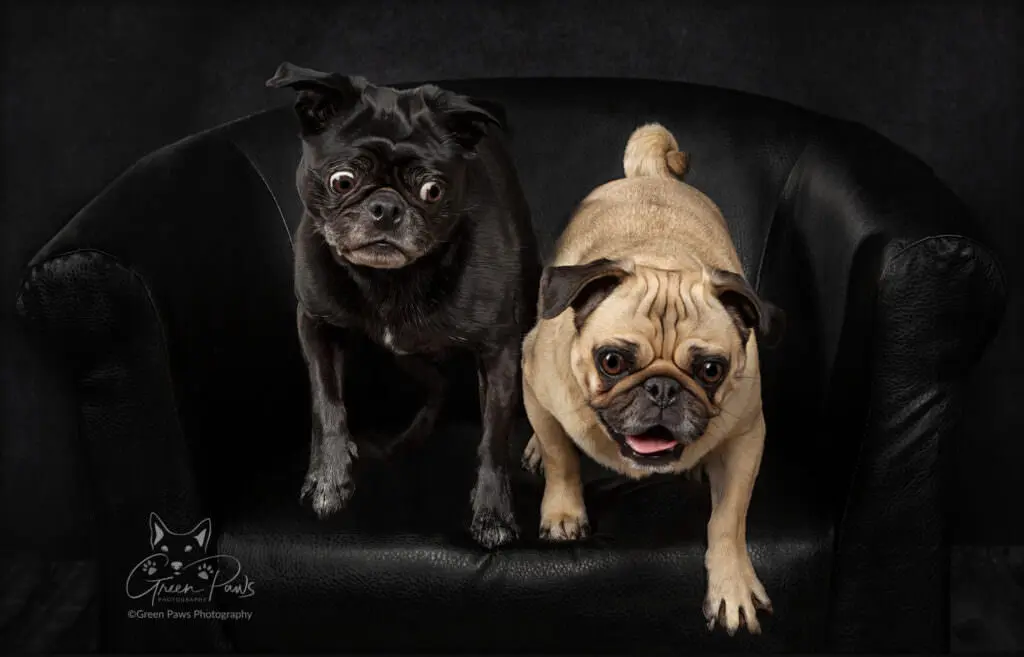
One thing that often surprises clients: studio lights rarely bother dogs. Softboxes diffuse the light, so there’s no blinding flash.
What occasionally catches a dog’s attention is the small popping sound that can occur when the lights fire.
Before we begin photographing, I’ll test the lights and observe your dog’s reaction. Some dogs ignore the sound completely. Others may glance toward it the first few times. A small number of dogs may be startled by the sound and need a little extra time to become comfortable.
There is no rush. The session is always adjusted to your dog’s pace and comfort level.
During the Portrait Session
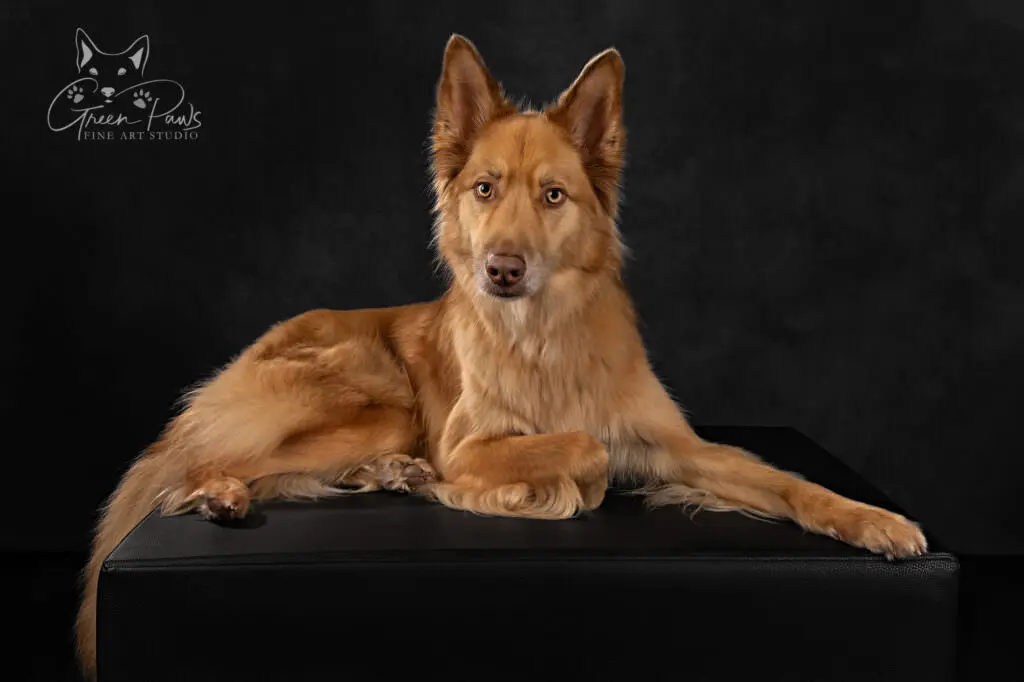
Once your dog is relaxed and comfortable, we’ll begin creating portraits.
Most clients are asked to sit back and relax while I work directly with their dog. Dogs naturally look toward their people, so minimizing distractions often helps create stronger expressions and better attention toward the camera.
Depending on your dog’s personality and comfort level, I may occasionally ask for your assistance. Some dogs feel more secure with their person nearby, while others work best independently. Some portraits are created with dogs wearing a leash for safety and guidance. Any visible leash is carefully removed during the finishing process. The final portrait reflects the artwork itself, not the tools that helped create it.
Not every dog arrives with polished skills, and that’s perfectly okay. A dog’s behavior in the studio isn’t always a reflection of what they know. Even dogs with extensive training can become distracted when they’re exploring a new environment filled with unfamiliar sights, sounds, and smells.
Throughout the session, breaks are provided as needed. Some dogs are ready to work right away, while others benefit from a slower approach. The experience is tailored to the individual dog rather than forcing every dog into the same process.
It’s About More Than Sitting Still
One of the biggest misconceptions about professional dog photography is that dogs must be perfectly trained, or that they need to sit still and pose patiently for the camera.
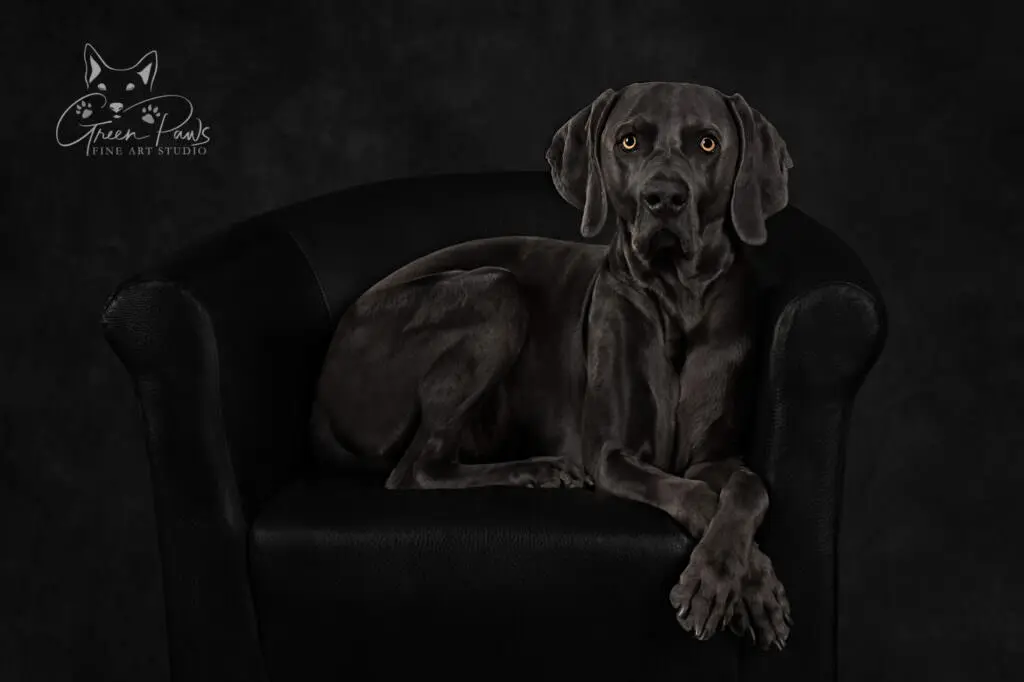
I’m not looking for robotic obedience. I’m looking for personality. Most of the best shots happen in the brief seconds a dog pauses, when I catch their attention and that personality shines through. Those moments happen naturally when a dog feels safe, comfortable, and engaged.
The curious head tilt. The proud expression. The gentle gaze. The spark that makes your dog uniquely who they are.
After the Session
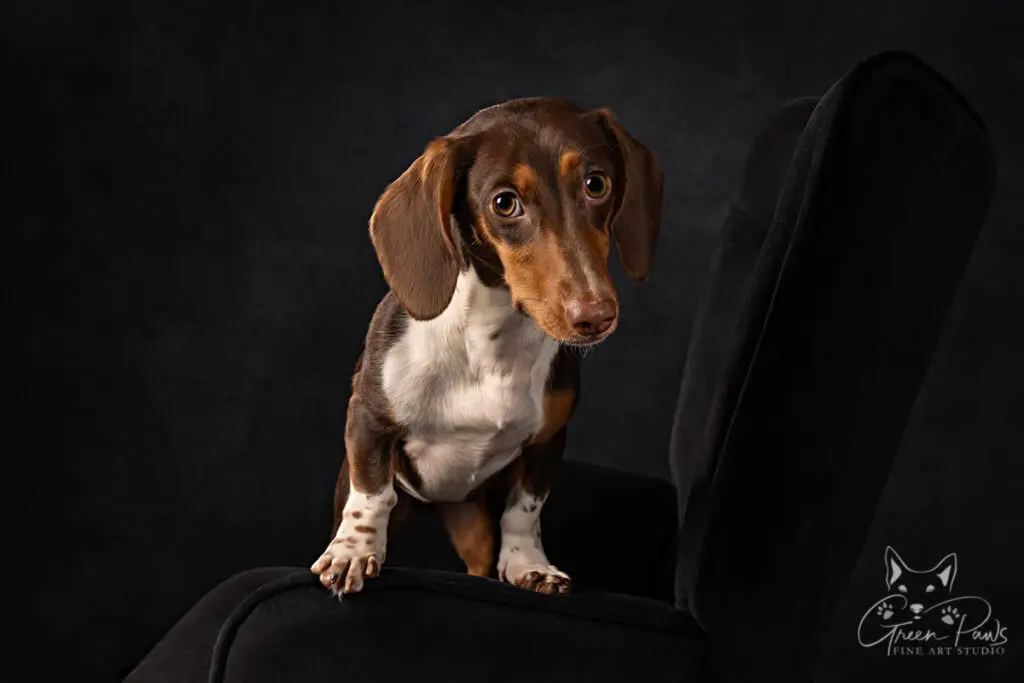
Once we’ve finished photographing, you’re welcome to take a look at the artwork options available through the studio, including wall art, fine art prints, folio boxes, and desk displays.
A week or two later, we’ll meet via Zoom for your ordering appointment, where you’ll enjoy a first look at your final images and choose the artwork that best fits your home.
A Comfortable Experience for Dogs and Their People
Every part of the portrait experience is designed with your dog’s well-being in mind.
There is no pressure for them to perform, no expectation that they be perfectly trained, and no rush to force a photograph before they’re ready.
The goal is simple: create a relaxed environment where your dog’s personality can shine, resulting in timeless artwork you’ll enjoy for years to come.